Date – October 3, 2026
Time – 1 pm – 3 pm
Cost – $40
On Zoom
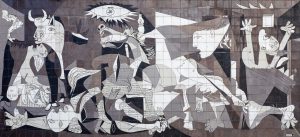
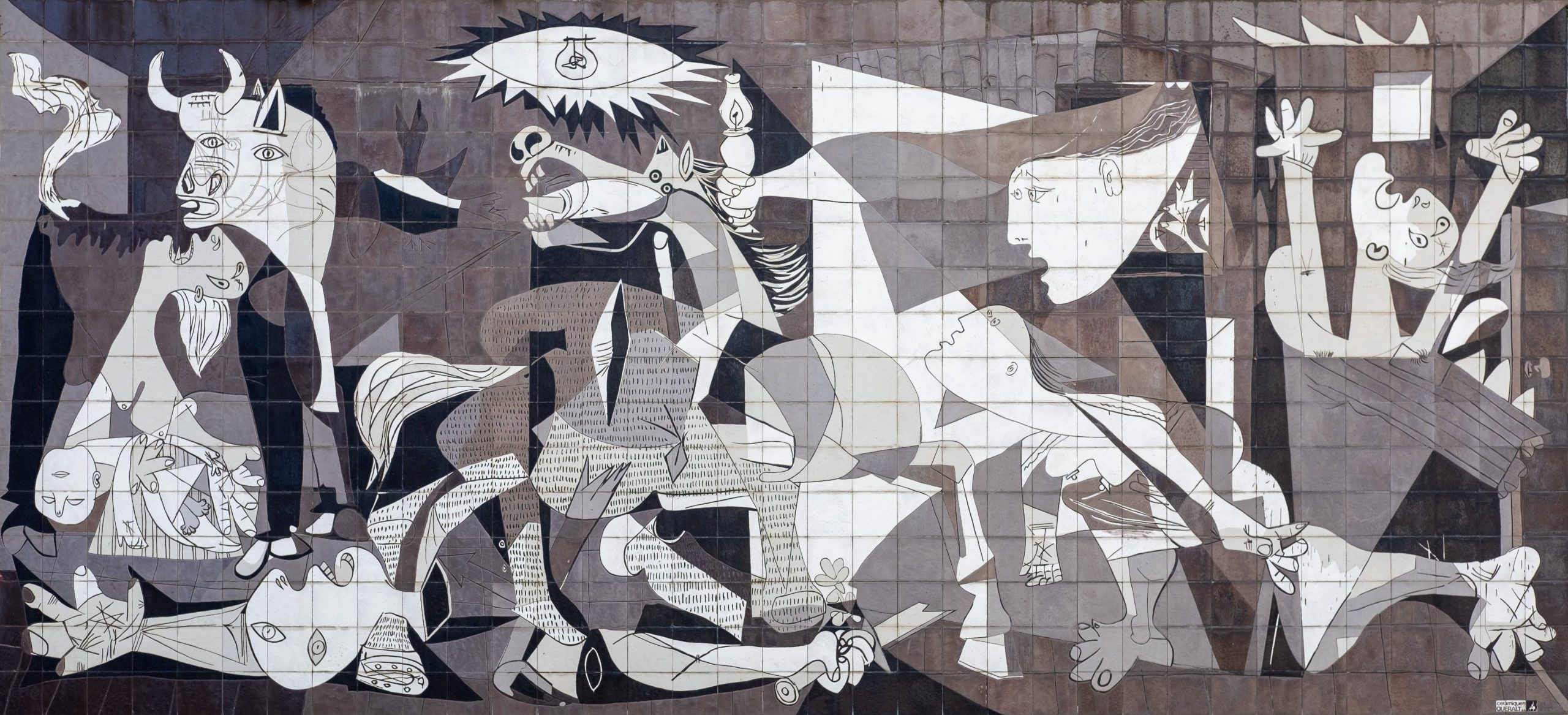
Pablo Picasso, Guernica (1937)
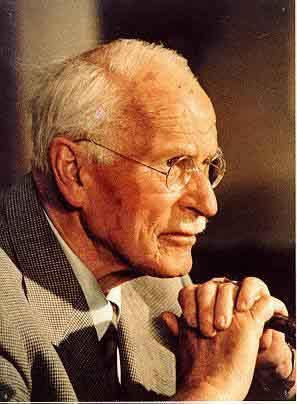
Join us on our journey to visit some of C. G. Jung’s masterpiece works.
In this seminar, we are going to look at his Collected Works #15, titled The Spirit in Man, Art, and Literature, which comprises essays revealing the collective, historical and individual sources and influences on some outstanding personalities, including Dr. Jung himself.
We will review essays on:
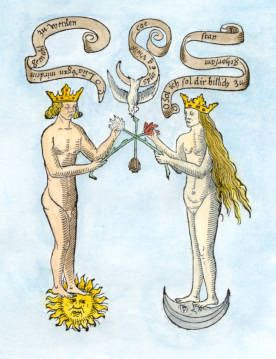
*Paracelsus
* Dr. Sigmund Freud
*Richard Wilhelm
*James Joyce
*Picasso
This is a perfect opportunity to learn about and widen our knowledge of Dr. Jung’s approach to and use of alchemy, art, literature, and sinology in psychoanalysis.
Participants are not required to obtain the text but if they wish to do so, the reference material will be from C. G. Jung, The Spirit in Man, Art, and Literature, Bollingen Series XX, Princeton University Press, Princeton, New Jersey, 1990, ISBN #978-0-691-0-17754
All are encouraged to share their own understanding of the material, to the extent they feel comfortable.
Olga E. Turcotte, MIM, is a lecturer based in Cambridge, Massachusetts. She has lived and studied in seven countries and has worked in the fields of corporate finance, non-profit management, consulting and education. Her interest in analytical psychology started in the mid 80’s while she was still living in C. G. Jung’s Switzerland and has become her vocation over the years. Her areas of focus are dreams, history, literature, religion and symbolism.
Date and Time:
Saturday, October 3, 2026
1 pm – 3 pm, (EST) via Zoom
Cost: $40
*If you are in a unique situation and do not have the financial resources to afford our fee, please email us at cgjungne@gmail.com
Registration:
To register, please enter the quantity you would like to purchase in the box below. Then click the “Register Now” button.
Ego and Archetype
with Jason Smith, MA, IAAP
A Six Week Study Group
April 19th, 26th, May 3rd, 10th, 17th and 24th
7:00 – 9:00 pm (12.0 hours total) via Zoom
Description
Edward Edinger’s Ego and Archetype is a classic work, by one of the foremost interpreters of Jung, on one of Jung’s core psychological concepts – the process of individuation. In this 6-week class, we will do a close read of Edinger’s text. We will explore and discuss such topics as the ego-Self axis, the nature of individuality and individuation, and the religious function of the psyche. As we work our way through the book together, we will consider the implications for both clinical practice as well as our own personal individuation journeys.
Suggested Reading
- Edinger, E. (1992). Ego and archetype: Individuation and the religious function of the psyche. Boston: Shambhala Publications, Inc.
- Jung, C. G. (1931/1966). The aims of psychotherapy. In H. Read et al. (Eds.), The collected works of C.G. Jung (R. F. C. Hull, Trans., Vol. 16, pp. 36-52). Princeton, NJ: Princeton University Press.
- Jung, C. G. (1931/1970). The spiritual problem of modern man. In H. Read et al. (Eds.), The collected works of C.G. Jung (R. F. C. Hull, Trans., Vol. 10, pp. 74-94). Princeton, NJ: Princeton University Press.
Faculty
Jason E. Smith, MA, IAAP, is a Jungian analyst in private practice in Manchester-by-the-Sea, MA. He is the author of Religious but Not Religious: Living a Symbolic Life and the creator and host of the podcast Digital Jung. Jason serves as a training analyst and faculty member for the C.G. Jung Institute of New England.
Cost
- $300 for series for general public (12 contact hours)
- $240 for past or present FCP participants
CEUs: $15
12 Social Work and MHC CEUs have been applied for.
Classic Writings in Analytical Psychology
Classic Writings in Analytical Psychology with CEUs
Memories, Dreams, Reflections
with D. Stephenson Bond, M.Div., IAAP
A Six Week Study Group
February 14th, 21st, 28th, March 14th, 21st, and April 4th
10:00 am – 12:00 noon (12.0 hours total) via Zoom
Description
Memories, Dreams, Reflections is nearly a sacred text for students of Jung, the kind of book one might read many times over at different stages of life. Published posthumously, this book carries a complicated story: it almost never got published; it is presented as an autobiography but was only loosely written by Jung, himself – and with those parts being highly redacted and edited besides. We will read MDR alongside an actual biography – Jung: A Biography by Deirdre Bair – to better understand Jung’s historical context, personal history and social milieu. This helps us to delve deeper into the important sections and ideas of this text which, by itself, put me on the path to becoming an analyst.
Suggested Reading
- Jung, C. G., Memories, Dreams, Reflections, New York: Vintage Books, 1989 (1961).
- Bair, Deirdre, Jung: A Biography, Little, Brown and Company, 2003.
Faculty
D. Stephenson Bond, M.Div., IAAP, is a graduate of the C. G. Jung Institute, Boston, and the author of six books, most recently Confessions of an Introvert: The Solitary Path to Emotional Maturity (2018), as well as Living Myth: Personal Meaning As a Way of Life (1993, 2002) and The Archetype of Renewal (2003).
Cost
- $300 for series for general public (12 contact hours)
- $240 for past or present FCP participants
CEUs: $15
12 Social Work and MHC CEUs have been applied for.
Classic Writings in Analytical Psychology
Classic Writings in Analytical Psychology with CEUs
A Series Of Six Friday Evening Presentations
January 15, 2027 – June 18, 2027
– Transformation Through the Archetype of the Bear
– The Miracle of Marcelino (Spain)
– Moby Dick: An American Myth
– The Old Woman Against the Stream (Norway)
– Allerleirauh: A Tale of a Journey to Individuation
– Between Silence and Sound: Music As Bridge Joining the Two into One and the Ascendant of the Third in Individuation
Transformation Through the Archetype of the Bear: Bear’s Lodge and the Seven Little Girls (Lakota) and Snow White and Rose Red
with Annette Hanson, LCMHC, IAAP
January 15, 2027
6:30 – 8:30 pm via Zoom
Description
The Miracle of Marcelino (Spain)
with Michael Conforti, Ph.D., IAAP
February 19, 2027
6:30 – 8:30 pm via Zoom
Description
Moby Dick: An American Myth
with Jason Smith, MA, IAAP
March 19, 2027
6:30 – 8:30 pm via Zoom
Description
The Old Woman Against the Stream (Norway)
with Rick Bouchard, LICSW, IAAP
April 16, 2027
6:30 – 8:30 pm via Zoom
Description
Allerleirauh: A Tale of a Journey to Individuation
with Michelle Seligson, M.Ed., IAAP
May 14, 2027
6:30 – 8:30 pm via Zoom
Description
Between Silence and Sound: Music As Bridge Joining the Two into One and the Ascendant of the Third in Individuation
with Rolando J. Fuentes, MSW, IAAP
June 18, 2027
6:30 – 8:30 pm via Zoom
Description
Cost
Series of 6 Presentations
- $300 for series for general public (12 contact hours)
- $240 for past or present FCP participants
Individual Presentations
- $60 per individual presentation
- $40 for past or present FCP participants
CEUs: $15
12 Social Work and MHC CEUs have been applied for. CEUs are offered only for attendance in the full series. There are no CEUs for individual programs.
Register For Full Series Of 6 Presentations
Psyche and Symbol in Story and the Arts
Psyche and Symbol in Story and the Arts with CEUs
Register For Individual Presentations
Transformation Through the Archetype of the Bear – January 15, 2027
The Miracle of Marcelino (Spain) – February 19, 2027
Moby Dick: An American Myth – March 19, 2027
The Old Woman Against the Stream (Norway) – April 16, 2027
Allerleirauh: A Tale of a Journey to Individuation – May 14, 2027
Between Silence and Sound: Music As Bridge Joining the Two into One and the Ascendant of the Third in Individuation – June 18, 2027
Description
Transformation Through the Archetype of the Bear: Bear’s Lodge and the Seven Little Girls (Lakota) and Snow White and Rose Red
With Annette Hanson, LCMHC, IAAP
January 15, 2027, 6:30 – 8:30 pm (Zoom only)
This presentation will focus on the Grimm’s fairy tale Snow White and Rose Red and the American Indigenous Lakota myth, Bear’s Lodge and the Seven Little Girls. A bear is featured as the central symbol for transformation in both stories. In this presentation you will learn some fundamental skills on how to interpret fairy tales and myths including the use of personal associations and archetypal amplifications, how to garner meaning from the dynamic structure of a fairy tale or myth and how studying fairy tales and myths can help you to be more adept at interpreting your own dreams. We will explore the motifs of what it means to be cursed/bewitched, twinning as a motif of emergent energy from the unconscious, earth as a sacred refuge, and the trickster archetype. We will also look at these stories from the lens of the feminine aspects of ourselves and why the feminine is an important ingredient in the individuation process. Please bring your accounts of bear stories to this class, whether the stories are from an internal place, for example a dream of a bear or a symbol of a bear that is important to you or a real-life encounter with a bear. Pdf versions of these tales are available in the Google Drive file associated with this program.
Faculty
Annette Hanson, LCMHC, IAAP, is a senior Jungian Analyst, a faculty member and president of the C. G. Jung Institute of New England. She is also a Licensed Mental Health Counselor in both NH and MA. Annette has taught analytic training seminars on the Jungian clinical process and fundamental Jungian theory as well as several public lectures on psychoanalytic theory, attachment theory and Jungian theory. Annette is on the Editorial Board of the Journal of Analytic Psychology. She lives and has a private practice in Newmarket, NH.
back to top
The Miracle of Marcelino (Spain: Marcelino, pan y vino)
with Michael Conforti, Ph.D., IAAP
February 19, 2027, 6:30 – 8:30 pm (Zoom only)
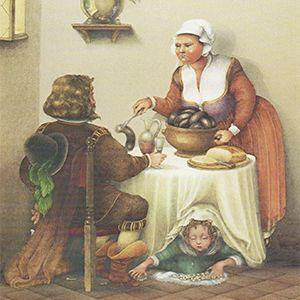
Abandoned on the doorsteps of a monastery as a newborn, and raised by the loving monk living there, this tale tells the story of how this child re-awakened a profound experience of spirituality which had been eclipsed by religion. Truly a beautiful story of love for the spirit which had been forgotten, the The Miracle of Marcelino serves to remind us of what Jung often spoke of as the difference between religion and spirituality, that being a direct and deeply moving encounter with the numinous.
I recommended that you watch the original 1955 black-and-white version of this film starring Pablito Cavlo. It is available online on Tubi (free with ads): https://tubitv.com/movies/458881/miracle-of-marcelino.
Faculty
Michael Conforti, Ph.D., IAAP, is a Jungian analyst and the Founder and Director of the Assisi Institute. He is a faculty member at the C.G. Jung Institute of New England, the C.G. Jung Institute of New York, and for many years served as a Senior Associate faculty member in the Doctoral and Masters Programs in Clinical Psychology at Antioch New England. A pioneer in the field of matter-psyche studies, Dr. Conforti is actively investigating the workings of archetypal fields and the relationship between Jungian psychology and the New Sciences.
He has presented his work to a wide range of national and international audiences, including the C.G. Jung Institute – Zurich and Jungian organizations in Australia, Canada, Colombia, Denmark, Ecuador, Italy, Russia, South Africa, the Ukraine and Venezuela.
He is the author of Threshold Experiences: The Archetype of Beginnings (2007) and Field, Form and Fate: Patterns in Mind, Nature, and Psyche (2002). His articles have appeared in Psychological Perspectives, The San Francisco Jung Institute Library Journal, Roundtable Press, World Futures: The Journal of General Evolution, and Spring Journal. His books have been translated into Italian, Russian, and a soon to be released Spanish edition of his work.
back to top
Moby Dick: An American Myth
with Jason Smith, MA, IAAP
March 19, 2027, 6:30 – 8:30 pm (Zoom only)
According to Carl Jung, Moby Dick should be considered the greatest American novel. “This book,” writes Edward Edinger, “is palpitatingly alive. It is awesome in the intensity of the depths it reveals.” Resounding, as it does, with powerful archetypal and mythic depths, Melville’s novel reveals crucial insights into the collective psyche of America and, indeed, the world. Its portrait of the monomaniac Ahab’s hunt for the White Whale has powerfully relevant things to say to us today about our relationship with nature, with Transcendence, and with each other.
Suggested Reading
Moby Dick by Herman Melville (Any edition will do, though you are encouraged to use the Norton Critical Edition, Third Edition, if possible)
Jung, C. G. (1922/1966). On the relation of analytical psychology to poetry. In H. Read et al. (Eds.), The collected works of C.G. Jung (R. F. C. Hull, Trans., Vol. 15, pp. 65-83). Princeton, NJ: Princeton University Press.
Jung, C.G. (1930/1966). Psychology and literature. In H. Read et al. (Eds.), The collected works of C.G. Jung (R.F.C. Hull, Trans., Vol. 15, pp. 84-105). Princeton, NJ: Princeton University Press.
Faculty
Jason E. Smith, MA, IAAP, is a Jungian analyst in private practice in Manchester-by-the-Sea, MA. He is the author of Religious but Not Religious: Living a Symbolic Life and the creator and host of the podcast Digital Jung. Jason serves as a training analyst and faculty member for the C.G. Jung Institute of New England.
back to top
The Old Woman Against the Stream (Norwegian: Kjerringa motstrømmen)
with Rick Bouchard, LICSW, IAAP
April 16, 2027, 6:30 – 8:30 pm (Zoom only)
Jung wrote that fairy tales represent “the purest and simplest expression of collective unconscious psychic processes,” understanding them to depict the most common of human psychic conflicts and their possible resolution. In this presentation we examine the Norwegian fairy tale The Old Woman Against the Stream – also known as The Wife Against the Stream or The Contrary-Minded Woman. The tale humorously depicts a stubborn woman who disagrees with her husband on everything. Their arguments escalate to the point where the wife falls off a bridge and into the rushing river. Despite the husband’s attempts to save her, his wife stubbornly drowns. The woman’s husband and neighbors search for her body but find none downstream. Realizing she would float upstream due to her contrary nature, they search above the waterfall and find her! In Norway, kjerringa mot strømmen has become an idiom. Originally mocking extreme stubbornness, it now describes a nonconformist with grit, principles, and an independent nature who can stand up for their beliefs and defy the current. How does this analogize to what Jung described as the process of individuation or psychological growth? What lessons might this tale hold for us today? A pdf version of this tale is available in the Google Drive file associated with this program (Fairy Tales from the Far North, pp.39 -45).
Faculty
Rick Bouchard, LICSW, IAAP is an independently Licensed Clinical Social Worker in private practice in Southern Maine. He is a Jungian analyst having graduated from the C.G. Jung Institute of New England (then the C.G. Jung Institute of Boston). He is currently in a doctoral program in Modern Psychoanalysis at the Boston Graduate School of Psychoanalysis, currently ABD and working on his dissertation on the Indian caste system and Untouchables (Dalits) who have emigrated to the United States.
back to top
Allerleirauh: A tale of a journey to individuation
with Michelle Seligson, M.Ed., IAAP
May 14, 2027, 6:30 – 8:30 pm (Zoom only)
Fairy tales and legends occur in diverse cultures and throughout human history as one way to share and perhaps to understand human behavior. The Grimms’ Brother’s version of Allerleirauh – the title translates as “all kinds of fur” or “many furred creatures” – is a story of psychological redemption. Fur is earthy, material and animal, so we can infer that in this tale fur has protective properties and is a central element in the story. Allerleirauh is one of many fairy tales that feature redemption from oppression, with Cinderella being one of the most famous and widely known.
In this program we will engage together in understanding the symbolic aspects of one fairy tale that resonates even today with the process of psychological trauma and redemption that occurs throughout human history. While the subject of this fairy tale is a female figure, fairy tales offer all of us an opportunity to reflect on our own story and trajectory into the development of a functional ego and self-concept.
A pdf version of this tale is available in the Google Drive file associated with this program. Reading the tale prior to our session will offer an opportunity to reflect on those aspects of impact to the reader, which can then be presented and discussed by the group. Portions of the presentation will offer a closer look at the Jung’s interpretive emphasis on fables, legends and fairy tales as universal symbols that transcend time and divergent cultures.
Faculty
Michelle Seligson (Micki), M.Ed., IAAP, NAAP, trained as a Jungian analyst at the C.G. Jung Institute – Boston. She graduated in 2014 from the Institute where she is currently a supervising analyst. She has a private practice in Cambridge, Massachusetts. From 1978 to 2007, at Wellesley College’s Centers for Women (formerly known as the Wellesley College Center for Research on Women) Michelle founded and led the National Institute on Out-of-School Time (NIOST.) She has co-authored several publications, including Bringing Yourself to Work: A Guide to Successful Staff Development in After-School Programs (Columbia University Teachers College Press, 2003). Beginning in 2024 she co-produced a documentary film, Who Does She Think She Is about five women artists’ experience as mothers and artists. The film is available to view on YouTube and elsewhere on the Internet. Michelle has written poems since she was 14 with one of her poems being published in the Journal of the Central Conference of American Rabbis.
back to top
Between Silence and Sound: Music as Bridge Joining the Two into One and the Ascendant of the Third in Individuation
with Rolando Fuentes, MSW, IAAP
June 18, 2027, 6:30 – 8:30 pm (Zoom only)
This presentation explores the space, or ‘bridge’, that exists between opposing forces, inspired by a Hazara tale. Jung suggests in his Collected Works 8 that the tension between opposites is essential for our personal growth. As I read this tale I wondered, “What energy brings these opposites together? Why not focus on the bridge between them?” The story touches on several themes of opposites, such as student and teacher, young man and young woman, the individual and the group, and the stranger and the familiar. The theme of silence and sound, represented by the Afghan flute, the tula, are central to the story, guiding both the protagonist, Abdullah, and his teacher, Karim Zand, on their journeys of individuation. This presentation will include some interactive moments to help us experience the feeling of sound as we explore the sensation of bridging the gap through the music of the soul.
Suggested Reading
Jung, C. G. (1960/1969). Collected Works of C. G. Jung, Volume 8: The Structure and Dynamics of the Psyche, (R. F. C. Hull, Trans.), Princeton University Press (1960/1969).
Mazari, Najaf, “The Music School,” in The Honey Thief, Viking (2013).
von Franz, M.-L., The Interpretation of Fairy Tales,” (Rev. ed.). Shambhala Publications (1996).
Streich, H., “Music in Dreams,” in Jung Journal (2009) 3(2) 63-73.
Faculty
Rolando J. Fuentes, MSW, IAAP, is a clinical social worker and Jungian analyst who lives and works in the Washington DC area. He maintains a private practice in the Dupont Circle neighborhood where he works with adults and couples. He completed his MSW with a focus on clinical work with children and adolescents at the National Catholic School of Social Service at the Catholic University of America and has served the DC community for over 25 years. He is a member of the C.G. Jung Institute New England, the International Association of Analytical Psychology as well as the Washington Baltimore Centre for Psychoanalysis (WBCP) and the New Washington School of Psychiatry (NWSP). He serves on the Observational Studies Program faculty at the WBCP and the Core Concepts and Clinical Program faculties of the NWSP. His area of interest is living between cultures, mostly between North American and Latin American cultures as well as gender/sexual orientation cultures. In addition, he is interested in the sacred stories of different cultures, specifically Mesoamerican culture, Western astrology, psychological type and the performing arts. He is a lifelong learner and is always keen to keep learning.
back to top
This program is full. We are no longer taking registrations.
Date – September 21st – October 26th, 2026
Time – Mondays: 7 pm – 9 pm
Cost – $150 Adults / $75 Students and Seniors
On Zoom
You are invited to join a small interactive dream group for writers, artists, storytellers and clinicians interested in exploring their own and the dreams of others. This is not a therapy group, but individuals will learn a method of working with dreams and the creative imagination that will enhance their understanding of how dreams can influence their creative projects. Clinicians will also learn to use this method in their work with clients.
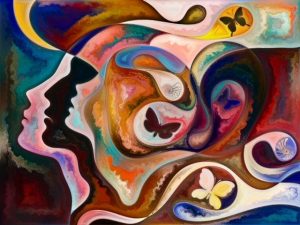
During the dream group, participants are guided to re-enter the landscape of each participant’s dreams. A slow and careful exploration of the dream images, from a variety of perspectives, elicits sensations and affective states that are experienced in the body. This work is known to lead to an increased depth of the creative imagination and a profound sense of one’s own humanity.
Dates and Time:
7:00 PM – 9:00 PM EST
on Zoom
Mondays:
Sept. 21, 28, Oct. 5, 12, 19, 26
Cost: $150
Students and Seniors: $75
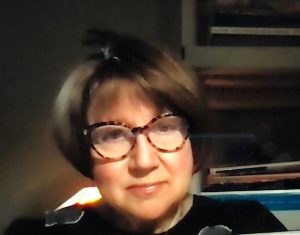
This group will be led by Jill Fischer, PsyA, APRN, BC, IAAP, a Jungian Analyst and a board-certified advanced nurse practitioner with worldwide experience working with the dreams of individuals and groups both in-person and on the Internet. She is a training and consulting analyst at the C.G. Jung Institute of New England and past president of the New England Society of Jungian Analysts (NESJA). She is presently Co-Chairman of the Ethics Committee of the IAAP. Jill co-wrote the section on Embodied Imagination in Barrett, Diedre and McNamara, Patrick, editors. Encyclopedia of Sleep and Dreams [2 volumes]: The Evolution, Function, Nature, and Mysteries of Slumber, Greenwood, 2012.
Date – November 7, 2026
Time- 12 pm – 2:30 pm EST
Cost- $75
On Zoom
As a central notion in Jungian psychology, individuation generally has been treated as a hard-won goal, following a model of heroic efforts to achieve a realization of the self. In this course we will look at how Jung developed this concept as a type of modern spirituality. Drawing upon ancient and medieval philosophical roots coupled with a prolonged confrontation with the unconscious, during his “Red Book” period (1913-1932), we will explore the path which led him to this vision of human potentiality.
This will be followed by an examination of potential extensions: synchronicity will be seen as a needed, fundamental conceptual bridge towards a fuller, more holistic conceptualization of individuation. An approach to a reenchantment of the mind, and of the world emerges from this extension. Further, consideration of contemporary complexity theory offers a path towards a broad revision of Jung’s opus. Consequently, the notion of individuation into to a more open-ended, dynamic process, which includes a critique of its classical “heroic” orientation. Collective, cultural dimensions to individuation can then be considered and better appreciated.
More controversially, we will look at the post-mortem potentiality of individuation, starting with Jung’s own beliefs. Exploration of unconscious imagery will be considered in terms of a recovery and reanimation of the forgotten gods/goddesses of the netherworlds in various cultures. Individuation in this way becomes a collective enterprise to restore and revitalize psychic verticality and open space for the reality of the imagination.
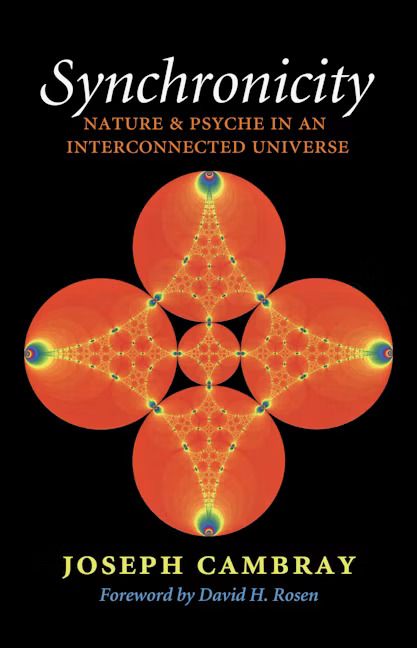
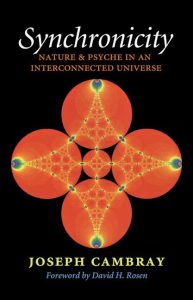
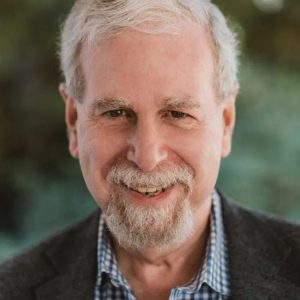 Joseph Cambray, Ph.D. is Past-President-CEO of Pacifica Graduate Institute; he is Past-President of the International Association for Analytical Psychology (IAAP); has served as the U.S. Editor for the Journal of Analytical Psychology (JAP.) He was a faculty member at Harvard Medical School, Center for Psychoanalytic Studies. Dr. Cambray lives in the Santa Barbara area of California. His numerous publications include the book based on his Fay Lectures: Synchronicity: Nature and Psyche in an Interconnected Universe. He has also published numerous paper and book chapters. He regularly lectures and gives workshops internationally.
DATE AND TIME
Saturday, November 7, 2026
12 pm – 2:30 pm EST on Zoom
Cost:
$75
2.5 MHC and SW CEUs available ($15 CEU fee)
Public Registration
Institute Analyst Member Registration